Showing posts with label Roman Greeks. Show all posts

Friday, April 13, 2012

The ancient Greeks in Roman Britain


As we know the Greeks were integrated into the Roman empire after the  conquest of the eastern Mediterranean.The Romans absorbed many elements of the Greek culture and tolerated the usage of the Greek language especially in the eastern provinces.

This is the reason why the Greeks with some exceptions never revolted against Roman rule. Instead many of them migrated to Rome to work as physicians ,teachers, merchants or even as soldiers.

It seems that many Greek soldiers found themselves in Britain, the northwestern edge of the empire. This is proved from the evidence that are shown in the excepts that i posted below.There are also references about Greek merchants who were active in Britain.All the evidence comes mainly from archaeological findings and not from ancient literature.That evidence are mainly tombstones written in Greek or with Greek names engraved on them.

These excerpts from Anthony Birley's book "The people of Roman Britain"(Berkeley,1980)


Saturday, February 18, 2012

The Greek Popes of Rome

We know from history that the Greeks had never good relations or any connections with the papacy in Rome. The reasons for that are many.


  • The popes promoted the latin rite using the latin language 
  • The Greeks were under the political authority of the Eastern Roman empire(Byzantine) which promoted the patriarchate of Constantinople.
  • The Popes had bad relations with the emperors of the east contesting over the Roman legacy and the right to use it.
  • The pretext for the official break up of the east and the west were the dogmatic differences and the high point of this conflict was the sack of Constantinople by the crusaders in 1204.
Although Greeks had bad relations with the Papacy there were two periods in history where the Popes had Greek background. The first period was in the early stages of christianity when those who were appointed as bishops of Rome were either coming from the Greek community of Rome or were immigrants from the hellenistic east. The second was the period after Jutinian's conquests when Byzantium controlled for at least a century Rome and other regions of the Italian peninsula. At this period the emperors of the east promoted the appointment of Greek popes.

To begin with the very word 'pope' is Greek, meaning 'father' .

Early Christian period.
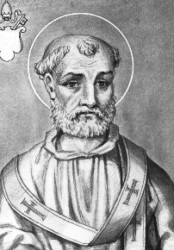

Saint Anacletus the second pope of Rome

St. Anacletus (Cletus) (+ c. 91), by origin a Greek from Athens and possibly a martyr. His name, correctly Anencletus, means 'blameless' (see Titus 1,7) and he may originally have been a slave. Feast: 26 April.
He was the second pope in history succeeding pope Linus who although he had a Greek name according to the archives of the Vatican he was from Tuscany. 


Saint Evaristus the fifth pope

St. Evaristus (+ c. 109), perhaps a martyr and almost certainly of Hellenic/Jewish origin. Feast: 26 October.
He was the fifth pope and held the office for eight years.He was the son of hellenized Jews from Bethleem.
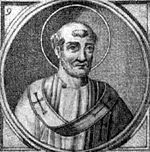

Saint Telesphorus. The seventh pope

St Telesphorus (+ c. 136), a martyr. Feast: 5 January (in the East 22 February).
He was the seventh pope. He was born in Greece


St. Hyginus (+ c. 142). Feast: 11 January.
He was born in Athens and initially he was a philosopher.


Saint Soter
He was born in Fondi of Campania. His name  betrays his  Greek descent.

St. Soter (+ 174), of Greek descent, he may have been martyred. Feast: 22 April.


Pope Eleutherius . His name means free in Greek.

St. Eleutherius (+ 189), Greek, possibly martyred. Feast: 26 May.He was born in Nicopolis in Epirus.
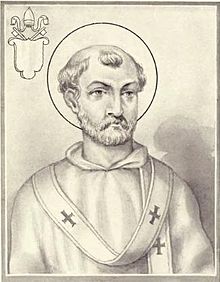
Pope Antherus(Anterus). The epitaph of his grave was written in Greek letters.

St. Antherus (+ 236), Greek and perhaps martyred. Feast: 3 January (5 August in East). 


St. Sixtus II (+ 258), an Athenian. He was a good and peace-loving man' who was much helped by Dionysius, Bishop of Alexandria. He was martyred by beheading, together with his seven deacons, one of whom was St Lawrence. He was and is greatly venerated in the Orthodox Church, West and also East. Feast: 7 August (10 August in the East). 
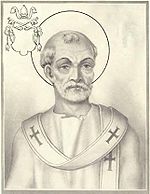
Saint Eusebius. The thirtieth pope


St. Eusebius (+ 310), the thirtieth pope and a Greek by origin. He was deported to Sicily by the Emperor and died there as a confessor. Feast: 17 August. 


Pope Zosimus. the fortieth pope.


St Zosimus (+ 418), the fortieth Pope, by origin a Greek. Although initially he made many errors of tact and judgement, he was anti-pelagian. Feast: 26 December.


The period of Byzantine Rome


St. Agatho (+ 681), Sicilian of Greek origin. Preceded by two popes who are not saints, he was a kindly and generous man, who also helped call the Sixth Oecumenical Council and helped end monotheletism. Feast: 10 January (20 February in the East). 


St. Leo II (+ 683), Sicilian, possibly of Greek descent. He confirmed the condemnation of a predecessor, the heretical Pope Honorius I (+ 638), who had fallen into the monothelite heresy. He loved the poor and was also much concerned with church music. Feast: 3 July.
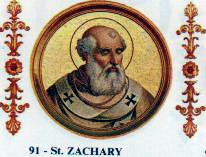


Pope Zachary


St Zacharias (+ 752), a Greek and the last Orthodox saint in this see, he opposed iconoclasm, adorned churches with frescos, and did much for missionary work and peace all over western Europe. Feast: 15 March. He was the last "Greek" pope. His successor facing the Lombard threat turned towards the Franks as the Byzantines were busy fighting in two fronts the Bulgars and the Arabs of the Abassid caliphate

The iconoclasm in Byzantium and the coronation of Charlemagne as emperor of Rome  worsened even more the relations beween he pope and the emperors of the East. This lead  to the final schism two centuries later in 1081.


images source: wikipedia
source:orthodoxengland.com

Monday, December 26, 2011

Saint Basil: The Santa Claus of the Greeks


Saint Basil the Santa of the Greeks.
In my previous post, it was explained who was saint Nicholas who has given his name to the Christmas father. The myth of Santa Claus as a pop figure has spread all-over the world even in non-christian countries. In Greece someone would expect him to be called saint Nicholas because of the Greek derivation of his name and because he is considered a saint also for the orthodox faith.

Paradoxically Santa Claus in Greek is Aghios Basilis(Saint Basil). Saint Nicholas is considered more of a protector of the sailors and less as a protector of kids. He has become something like a christian equivalent of Poseidon(Neptune). 

Let's see who Saint Basil was and why is he attested to possess the attributes of Santa Claus.
Saint Basil was born in Cappadocia a region of eastern Minor Asia(present day Turkey) in 330 AD.
His family were already pious Christians. He received Christian education at home but also attended lessons in the famous academy of Athens along with Gregory of Nazianzus an another great Christian father and Julian who would later become emperor and enemy of Christianity.
From left to right Saint Basil , Saint John Chrysostom and Saint Gregory of Nazianzus.
These three together are name as the Cappadokian fathers or as the three hierachs.
In 357 he travelled to Palestine, Syria and Egypt to study monasticism by living with other monks. He wrote books about what he learned there and these books are cosidered the basis for eastern monasticism.

He spent his years in Caesareia the capital of Cappadokia , trying to put down a spreading heresy called Arianism.In 370 he became a bishop and also an exarch of Pontus.From 370 and later there are many accounts about his charities and help of those who were in need. Previously he had already distributed all his wealth to the poor and as a bishop he founded an institution called Basileiada. This institution functioned as a hospital, orphanage and hotel for the homeless. The staff was composed of people who were volunteering.
Saint Basil finally died in 379 AD.

Saint Basil's deed to distribute his wealthy fortune to the poor children and later the foundation of the orphanage and constant help of underprivileged children made him the first Christmas father.

Saint Basil in Catholic vestments .
From a church of Prague.

Wednesday, March 30, 2011

Galenos(Galen) the heir of Hippocrates


Claudius Galen
Claudius Galen was a second century physiologist, philosopher, and writer who is often considered the most important contributor to medicine following Hippocrates. Even though Galen is fairly well known, his fame does not compare to that of Hippocrates, so Galen's reputation and work are often underscored by Hippocrates' notoriety. While Galen's name is mentioned in most sources about ancient medicine, usually only a small portion of the piece is dedicated to his accomplishments; this coverage often does not do him justice. Of the sources specifically written about Galen, most are fairly old and tend to focus a lot on Galen's philosophies and how his ideas measure up to the different schools of thought that existed in his time rather than on his medical acclaim. Newer and sometimes less complete sources on Galen often neglect to discuss extensively the philosophical aspect of Galen's works. Nevertheless, both medical pursuits and philosophy were major aspects that shaped Galen's life, work, and results. Therefore, this examination of Galen will aim to illustrate how medical, philosophical, and other influences affected Galen's work and shaped his reputation in the history of medicine.


The influence of ancient medicine is still present in modern medicine. Even today, despite technological, methodological, and experimental advances in medicine, many of the basic foundations in medical teachings date back to ancient times. Hippocrates and Galen are two of the earliest and most frequently cited influences on the development of medicine. While Hippocrates is known mostly for his contributions to patients' rights and the moral and professional obligations of physicians, Galen is still respected for his contributions to anatomy, physiology, and pharmacology and for his incorporation of philosophy, logic, and experiment with medicine. Galen's impact on medicine was particularly profound because of his extensive and meticulous research and his relentless search for the truth.


For hundreds of years before Galen's time, debates existed among physicians about which philosophy of medicine was most proper. By Galen's time, the Empiricists and the Rationalists were two of the major schools of philosophy influencing medicine and science. Empiricists believed that a competent doctor gained knowledge by experience not by creating or following medical theories. Others who believed that theories were necessary to supplement pure experience for adequate treatment of patients became known as Rationalists (Galen, 1985 xxii). In the fourth and fifth centuries BCE, both Aristotle and Plato rejected the idea that science could be adequately understood and practiced by experience alone and instead preferred the use of reason to provide medical knowledge. At this time, scholarly doctors who were extensively trained in their field studied and formulated rational theories about the human body and disease states, whereas practitioners who had gained knowledge through experience were often able to practice medicine as doctors without extensive training (Galen, 1985 xxiv-xxv). Because trained doctors used theoretical understanding to distinguish themselves from other less qualified practitioners, the tendency of Aristotle, Plato, and other scholarly physicians to rely on medical theory over pure experience was understandable. However, Empiricists argued that theoretical assumptions were unreliable and unverifiable, and that their method of using observable and quantifiable data to develop methods of treatment for similar classes of diseases was superior to Rationalist methods (Galen, 1985 xxv).


Around the same time that the debate between the Rationalists and Empiricists was going on, Hippocrates, a very influential physician, produced many writings stressing the importance of examining symptoms, finding natural causes, using rational cures, and keeping records of the course of diseases (BBC [b]). Because a religious prohibition on human dissection restricted Hippocrates and his followers' understanding of the body, they relied mostly on observable changes in the characteristics of their patients (Fishbein 9-11; Wischik). Hippocrates' concentration on observable characteristics of disease influenced medicine beyond his own lifetime and into modern times. Another influence that had developed around 500 BCE was the belief in Asclepius, the god of healing, who was thought to produce supernatural causes and cures for diseases. Many people believed in both natural and supernatural causes of disease because of these two major influences (BBC [b]). Therefore, in addition to the influences of the Rationalists and Empiricists, the belief in Asclepius and importance placed on Hippocratic teachings all helped to shape the state of medicine that Galen faced in his time around the second century AD. Physicians were still divided by their various approaches to medicine; however, Galen took a unique approach by incorporating both Rationalist and Empiricist ideas with a respect for his predecessors and for the supernatural role in disease and healing.


Galen was born around 129 AD in Pergamum, Asia Minor and belonged to a prestigious family headed by his father, Nicon, an architect (Galen, 1985 xii). Pergamum was a wealthy city, famous as a center of learning and for its temple of Asclepius, a god of healing (Galen, 1985 xii). While Nicon intended for Galen to study philosophy or politics, Asclepius supposedly came to Nicon in a dream and told him to allow Galen to study medicine (Pearcy). Starting at the age of sixteen or seventeen, Galen studied medicine as he traveled to Smyrna, Corinth, and Alexandria in order to achieve a more vast and extensive knowledge of medicine (Pearcy; Galen, 1985 xii). During this time he also studied philosophy from at least four different schools of thought in order to learn many different viewpoints so he could make up his mind about which was correct (Fishbein 22-23; Galen, 1985 xii). Because he found both strengths and faults with many philosophies, he avoided using one method of thought exclusively. Galen's accumulation of knowledge in many fields and his tendency to make conclusions based on facts and truth throughout his life contributed to his success and reputation.


At the age of 28, Galen was appointed as the physician to the gladiators. This was a prestigious position that provided him with plenty of opportunities to practice surgery techniques. These skills were useful when he conducted numerous dissections in his later years (Fishbein 22; BBC [a]). Several years later, Galen was summoned to be the physician to the emperors Marcus Aurelius and Commodus (Fishbein 23). These prestigious positions helped Galen to become a part of Rome's intellectual life and contributed to his opportunities to learn and study in the most conducive environment (Pearcy). Because Rome was a thriving academic center during Galen's lifetime, it was a prime location for him to conduct his experiments. Galen's career, research, and teachings thrived in Rome, so he remained there until his death around 200 AD (Galen, 1985 xiii). While Galen's fortunate background and prestigious appointments early in his career helped to strengthen his likelihood for success, the importance of his extensive and exhaustive research and writing on a plethora of topics cannot be discounted.


Philosophy and linguistics were major components of Galen's work and served as important tools in his medical career. In fact, the majority of his more than 300 writings were on the subjects of philosophy, medicine, and philology, which shows that Galen was very dedicated to multiple studies (Pearcy; Nutton 1998; Galen, 1985 xiii). Galen believed that philosophical knowledge was essential to all educated persons, especially physicians. To Galen, philosophical knowledge included an understanding of logic, ethics, and physics (Pearcy; Weisstein; Virginia; Galen, 1985 xv-xvi). Unlike most of his predecessors and contemporaries, Galen avoided joining any school of thought in medicine or philosophy, because he believed that the his loyalty to " 'the constant endeavor to find out what is true and to discern what is true and false in the claims made by others' " was more important than proclaiming loyalty to any one group of philosophers or physicians (Temkin 36; Fishbein 26). This lack of loyalty allowed him to develop his own thoughts and ideas while respecting his predecessors and criticizing his contemporaries. However, because he was not affiliated with any particular group, Galen frequently criticized his contemporaries, leaving him with the reputation of being self-admiring and argumentative (Pearcy). Although Galen was often criticized for being arrogant because of the rigidity of his beliefs, his disregard of more common political and professional associations helped to make his perspectives unique and relatively unbiased.


Galen and Hippocrates
Another characteristic of Galen central to his methods and perspectives was his relentless search for truth. Galen used meticulous dissections and sensory observations to confirm or disprove his new ideas and others' previous claims. He believed that logic was important for demonstrating truths, but warned that it should be used carefully when trying to confirm hypotheses, because it could pervert one's conclusions (Temkin 12, 22). Galen believed that both reason and observation served the dual purpose of helping to arrive at truths while helping to confirm truths once they were established (Galen, 1985 xxxii). The best method of discovery according to Galen's way of thinking was to assimilate the functions of reason with the clues obtained by the senses. Assertions by Galen himself about the importance of distinguishing fact from speculation confirm the impression of Galen as a "fanatical lover of truth who wages an unceasing battle against ignoramuses and scientific opponents" (Temkin 53). Galen believed that his methods of ensuring accurate research results was superior to other systems, so he did not accept any way besides his own as adequate. Nonetheless, Galen's firmly established criteria for evaluating the nature and quality of theories provided a high standard to which he held himself and others and ultimately contributed to his success.


Although Galen used some of the ideas of his predecessors, he did not hesitate to deviate from accepted theories when appropriate. Galen believed that the authority of ancients was limited to the validity of their claims, and that, while their theories need not necessarily be replaced, they usually required clarification and progression. His tendency to reexamine ancient science and to incorporate modified theories with his own ideas reflected his belief that progress is a cumulative process subject and knowledge is subject to verification (Temkin 31-3). For example, Galen found it necessary to reexamine Hippocrates' work in order to uncover previously misinterpreted science (Pearcy). He thought more accurate science was buried beneath centuries of inaccurate interpretations. Galen adopted Aristotle's theory of the four humors, which stated that the body is composed of a balance between the four elements present on earth- fire, earth, water, and air- which were manifested in the body as yellow bile, black bile, water, and phlegm, respectively. Further, Galen agreed with the Aristotelian notion of experiment, and he also believed in Aristotle's idea of the functional form of natural bodies, meaning that all bodies arising from nature are suited structurally for their function (Temkin 73). Nevertheless, he branched out with his own theories regarding ideas like the residing place of the soul and the functions of major organs such as the heart, brain, and liver. He elaborated on many old conceptions such as when he expanded the humors theory by asserting that a person's temperament could be distinguished by feeling the palm of the hand (Fishbein 25; Temkin 19, 73). Thus, Galen's work resulted from the foundations of Plato, Aristotle, and Hippocrates and provided a comprehensive summary of medicine until his time, but also further expanded science through his own experiments (Nutton 1998; Virginia; Pearcy).


Pig dissection
Anatomy was very important to Galen. He believed that "the working body is not understandable without knowledge of its structure" (Temkin 13). Galen did not dissect humans because of the negative social and religious stigmas associated with experimentation on the human body, but he performed dissections and vivisection experiments on many animals including apes, goats, dogs, and pigs (Fishbein 25; BBC [a]). Because he could only study animals, some of Galen's anatomical assertions were inaccurate with respect to the humans (Wischik). While studying animals led to some errors in his work, many more accurate observations and key ideas were uncovered through his thorough and intensive anatomical explorations. Galen shared his knowledge of anatomy with others by carefully recording his observations and techniques so as to help " 'all seriously interested in anatomy' " while ensuring that it was written " 'as clearly as possible for those who have never seen the operations' " (Temkin 12). Thus, although Galen's writing is very detailed and uses medical terminology, his writings were clear enough to be understood by anyone with minimal medical knowledge. Galen's reliance on anatomy and experiment showed his belief in the value of observation in medicine. He argued that diseases were manifestations of impaired anatomical functioning, so in order to diagnose and to treat disease, a fundamental understanding of the human structure was critical (Temkin 13). In other words, physicians could not possibly understand a disease and its effects on the body unless they understood the layout and functioning of a normal human body. Galen's methodology included reliance on experimental and observational results in conjunction with logic and reasoning to help elucidate concepts; his methods, in turn, became popular methods of study and research in medicine.


Galen's experiments and the texts which describe them were very meticulous and detailed. The care and persistence that he must have possessed surely contributed to his vast array of accomplishments. Dedication and patience were required from Galen in order to produce the extensive volumes of writing that he did, especially when considering that he wrote each word by hand with a stylus on papyrus, without the help of a stenographer, for the sake of learning and science alone (Fishbein 26). One of Galen's major advances was his work on the movement of blood in the body. While he never explained how the blood circulated, he made many important discoveries regarding the movement of blood in the body, including the differences between veins and arteries and the anatomy of the heart and its associated vasculature (Weisstein; Nutton 1998; BBC [a]; Fishbein 25). He incorrectly believed that food from the stomach was digested and taken to the liver, where it was transformed into blood (Temkin 155). From there, Galen explained "the veins which nourish the whole body all have their origin from the vena cava...the vena cava has two subdivisions of which one makes its way ascending upwards, and the other descends downwards" (Galen, 1962 169-70). Galen described with great detail how the veins and arteries running throughout the body nourish it with blood, but he never quite formed the link to connect the beating of the heart with the pattern of blood flow through the body. Instead, he thought that the heart provided the vital heat of the body (Temkin 154). The detail with which he studied the heart and blood vessels contributed to his progress with the cardiovascular system and contributed a vast amount of knowledge to medicine's understanding of this crucial process.


Galen's precise descriptions and studies of neurological functions and anatomy also led to major breakthroughs. Galen used dissection to explore the anatomy of the brain and spinal cord, including the spinal nerves (Galen, 1962; Nutton 1998; Fishbein 25). Not only did he explore anatomy, but he also demonstrated the functions of nerves. For example, Galen tied off laryngeal nerves to demonstrate their function with the voice and to relate their function to the brain (Nutton 1998). He also showed that severing nerves at different locations along the spinal cord produced varying levels of paralysis (Temkin 14; Fishbein 25; BBC [a]). These experiments and anatomical examinations led to the discovery of seven of the ten pairs of cranial nerves and the identification of many spinal nerves (Nutton 1998; Galen, 1962). Galen's use of experiments to prove his theories rather than being satisfied with speculation was unique and significant to his success. Considering that Galen had absolutely no technology to assist him and could only use his eyes and very basic instruments to carry out dissections and experiments, it is amazing that he was able to ascertain such vast amounts of knowledge about human function.


Galen also explored many other aspects of the human body, including the eyes, tongue, larynx, fetal development, and reproductive organs (Galen, 1962). In addition, his experiments with the kidneys showed that they were functionally related to the bladder (Nutton 1998). Ultimately, Galen's ideas about the body were explained by his belief in three bodily systems. The three systems consisted of the brain and nerves, the heart and arteries, and the liver and veins. The systems were each represented by a form of pneuma, an air like substance that was considered to be essential to all life. The pneuma physicon, or animal spirit, was present in the brain, the organ that was correctly predicted to be responsible for sensation and thought. Pneuma zoticon, or vital spirit, was in the heart, and represented life energy. The third system, consisting of the liver and veins, was involved with nutrition and growth and embodied the pneuma physicon, or natural spirit (Virginia; Nutton 1998; Weisstein). Galen divided the body into these systems according to his understanding of vital human functions and how they interacted based on his exploration of many bodily functions and structures. The systems and their corresponding pneuma contributed to his theory about the existence of the soul, a notion that eventually gained him both criticism and acclaim.


The foundation of all of Galen's treatment methods was his belief that disease resulted from an internal imbalance of the four humors: air (blood), fire (yellow bile), earth (black bile), and water (phlegm). Unlike Hippocrates, who believed that disease resulted from a humoral imbalance throughout the body, Galen believed that a disease-causing imbalance could be located within an organ (Nutton 1998). Because the disease was considered to be afflicting primarily one organ or region in the body, treatments devised by Galen were able to be more precise. Disease treatment was basically analogous to the Hippocratic method of treating with contraries; that is, by providing or removing opposing humors to correct the imbalance with which the patient was suffering (Temkin 18; BBC [a]). While treatment by contraries seems simplistic according to modern views, current research supporting the role of neurotransmitter levels in moods and some mental and physical diseases shows that perhaps Galen had a better understanding of the body and disease than was initially believed (Wischik). The use of opposites to treat diseases was undertaken by pharmacological agents or other "balancing" procedures, like bloodletting or purging.


Drugs developed by Galen were made from herbs that he collected from all over the world (Fishbein 26). The drugs were classified by their properties- heating, cooling, drying, or moistening- and were applied so as to counteract whatever humor disproportion existed. Galen improved the use of drugs by establishing different degrees of potency to treat varying levels of dysfunction (Temkin 20, 112). This was critical because now patients' afflictions were being treated more specifically and uniquely based on their particular symptoms and levels of distress. Proper medicinal dosing is still a crucial aspect of modern medicine that was started by Galen nearly two thousand years ago.


While most of the drugs and other methods of treatment popularized by Galen were used up until the seventeenth century, virtually none of these treatments were employed in more modern times. One exception, however, was the practice of monitoring the pulse. Galen was the first physician to use the pulse as an indicator of illness when compared to the normal pulse. Galen used pulse observations to diagnose diseases and symptoms such as fevers (Temkin 165; BBC [a]). Although the pulse measurement was one of the only treatments methods of Galen's that survived, Galen also furthered medical methods by starting the trend toward determining potency and doses of medicines, which is still fundamental in medicine of today.


Galen achieved notoriety during his lifetime, and his ideas and writings lived on for about 1400 years after his death. His texts were kept alive primarily by the Arabs until they were retranslated in Europe in the Middle Ages (Nutton 1998; Nutton 2000). One of the crucial causes of this endurance was that Galen's concepts coincided, for the most part, with Christian beliefs. Of great importance was Galen's assertion that human organs were suited for their function; this notion fit in with the Christians' "belief in a system ordained by nature" (BBC [a]). In addition, although Galen was not Christian, his writings expressed his belief in one god and in the body as an instrument of the soul (Virginia). Galen argued that three aspects of the soul existed, each coinciding with the functions of one of the three systems. Because Galen's ideas were based on monotheistic beliefs that included the existence of a soul, his ideas concurred with Christians' system of beliefs. Further, because Galen neglected to discuss the soul beyond its existence, it was subject to individual interpretation (Temkin 44, 171). This vagueness regarding particulars about the mortality and nature of the soul sometimes helped his ideas to be accepted, but also made him and the physicians who followed his methods subject to criticism and to accusations that they were atheists (Temkin 169-71).


Regardless of the religious approval or disapproval of Galen, his theories and writings remained prominent until the Renaissance. During this time, Galen's works were reexamined and studied. In particular, physicians found a new respect for Galen's emphasis on the identification and curing of illnesses and on detailed investigations of the body. The importance he placed on anatomy and verification of science led his followers to create a surge in inquiries about bodily structure and function. Ironically, Galen's own encouragement of experiment ultimately led to the overthrow of most of his ideas as Renaissance physicians found the flaws in Galen's work and developed new theories and medical techniques to replace or revise the older ones (BBC [a]; Nutton 1998; Nutton 2000). Despite new developments and understanding of the body, Galenic practices and remedies lived on for some time because, even though the concepts behind the treatments had been proven wrong or partially inaccurate, the physicians still believed that Galen's methods were effective (Temkin 165). And while Galen's practices, too, were eventually overturned and replaced with more modern therapies, Galen's influence on medicine was still crucial to modern medical science. The progress Galen made in his lifetime was astonishing, especially because he managed to influence medicine and philosophy simultaneously in dramatic ways.


References:
Fishbein, Morris.  Frontiers of Medicine.  Baltimore: Williams and Wilkins, 1933.
"Galen." University of Virginia Health Systems Website
        virginia.edu/hs-library/historical/antiqua/galen.htm>.
Galen. On Anatomical Procedures.  Trans. W.L.H. Duckworth. Ed. M.C. Lyons
        and B. Bowers.  Cambridge: Cambridge UP, 1962.
Galen.  Three Treatises On the Nature of Science.  Trans. Richard Walzer and
        Michael Frede.  Indianapolis: Hackett Publishing, 1985.
"Medicine Through Time: Claudius Galen (c. AD 129-216)."
        co.uk/education/medicine/nonint/prehist/dt/prdtbi3.shtml>. [a]
"Medicine Through Time: Greek Medicine."
        education/medicine/nonint/prehist/dt/prdtcs2.shtml>. [b]
Nutton, Vivian, Ph.D.  "Galen." Encyclopaedia Britannica.  1998.
        .
Nutton, Vivian, Ph.D. "Galen of Pergamum and the Medical Renaissance."
       University College London. 2000.
        page40.htm>.
Pearcy, Lee.  "Galen: a Biographical Sketch." Medicina Antiqua.
         .
Temkin, Owsei.  Galenism: Rise and Decline of a Medical Philosophy.  Ithaca:
         Cornell UP, 1973.
Weisstein, Eric. "Galen of Pergamum (ca. 130-ca. 200)."
         troves.com/bios/Galen.html>.
Wischik, Marcus.  "To what extent is modern medical theory and practice
        influenced by its more primitive forms?"  
        marcus/essay/med2.html>.


source:http://campus.udayton.edu/

Saturday, March 12, 2011

Hypatia the first female Greek philosopher astronomer and mathematician in history


Hypatia


There was a woman at Alexandria named Hypatia, daughter of the philosopher Theon, who made such attainments in literature and science, as to far surpass all the philosophers of her own time. Having succeeded to the school of Plato and Plotinus, she explained the principles of philosophy to her auditors, many of whom came from a distance to receive her instructions. On account of the self-possession and ease of manner, which she had acquired in consequence of the cultivation of her mind, she not unfrequently appeared in public in presence of the magistrates. Neither did she feel abashed in going to an assembly of men. For all men on account of her extraordinary dignity and virtue admired her the more. Yet even she fell victim to the political jealousy which at that time prevailed. For as she had frequent interviews with Orestes, it was calumniously reported among the Christian populace, that it was she who prevented Orestes from being reconciled to the bishop. Some of them, therefore, hurried away by a fierce and bigoted zeal, whose ringleader was a reader named Peter, waylaid her returning home, and dragging her from her carriage, they took her to the church called Caesareum, where they completely stripped her, and then murdered her with tiles.* After tearing her body in pieces, they took her mangled limbs to a place called Cinaron, and there burnt them. This affair brought not the least opprobrium, not only upon Cyril, but also upon the whole Alexandrian church. And surely nothing can be farther from the spirit of Christianity than the allowance of massacres, fights, and transactions of that sort. This happened in the month of March during Lent, in the fourth year of Cyril's episcopate, under the tenth consulate of Honorius, and the sixth of Theodosius.

Notes
* The Greek word is ostrakois, literally "oystershells," but the word was also applied to brick tiles used on the roofs of houses.


source: Socrates Scholasticus,  Ecclesiastical History


HYPATIA, daughter of Theon the geometer and philosopher of Alexandria, was herself a well-known philosopher. She was the wife of the philosopher Isidorus, and she flourished under the Emperor Arcadius. Author of a commentary on Diophantus, she also wrote a work called The Astronomical Canon and a commentary on The Conics of Apollonius. She was torn apart by the Alexandrians and her body was mocked and scattered through the whole city. This happened because of envy and her outstanding wisdom especially regarding astronomy. Some say Cyril was responsible for this outrage; others blame the Alexandrians' innate ferocity and violent tendencies for they dealt with many of their bishops in the same manner, for example George and Proterius.

Rachel Weisz starring as Hypatia in the movie Agora

Regarding Hypatia the Philosopher and the Sedition of the Alexandrians

Hypatia was born, reared, and educated in Alexandria. Since she had greater genius than her father, she was not satisfied with his instruction in mathematical subjects; she also devoted herself diligently to all of philosophy.
The woman used to put on her philosopher's cloak and walk through the middle of town and publicly interpret Plato, Aristotle, or the works of any other philosopher to those who wished to hear her. In addition to her expertise in teaching she rose to the pinnacle of civic virtue. She was both just and chaste and remained always a virgin. She was so beautiful and shapely that one of her students fell in love with her and was unable to control himself and openly showed her a sign of his infatuation. Uninformed reports had Hypatia curing him of his affliction with the help of music. The truth is that the story about music is corrupt. Actually, she gathered rags that had been stained during her period and showed them to him as a sign of her unclean descent and said, "This is what you love, young man, and it isn't beautiful!" He was so affected by shame and amazement at the ugly sight that he experienced a change of heart and went away a better man.
Such was Hypatia, as articulate and eloquent in speaking as she was prudent and civil in her deeds. The whole city rightly loved her and worshipped her in a remarkable way, but the rulers of the city from the first envied her, something that often happened at Athens too. For even if philosophy itself had perished, nevertheless, its name still seems magnificent and venerable to the men who exercise leadership in the state. Thus it happened one day that Cyril, bishop of the opposition sect [i.e. Christianity] was passing by Hypatia's house, and he saw a great crowd of people and horses in front of her door. Some were arriving, some departing, and others standing around. When he asked why there was a crowd there and what all the fuss was about, he was told by her followers that it was the house of Hypatia the philosopher and she was about to greet them. When Cyril learned this he was so struck with envy that he immediately began plotting her murder and the most heinous form of murder at that. For when Hypatia emerged from her house, in her accustomed manner, a throng of merciless and ferocious men who feared neither divine punishment nor human revenge attacked and cut her down, thus committing an outrageous and disgraceful deed against their fatherland. The Emperor was angry, and he would have avenged her had not Aedesius been bribed. Thus the Emperor remitted the punishment onto his own head and family for his descendant paid the price. The memory of these events is still vivid among the Alexandrians.


The first centuries AD christians Jews and Pagans fought for prevalence.

source: Damascius's Life of Isidore, reproduced in The Suda


put your country on top

free counters