Showing posts with label General history subjects. Show all posts

Tuesday, March 11, 2014

A Scottish tale of murder, incest and cannibalism.

The Legend
The tale of Sawney Bean, arguably Scotland's most shocking and gruesome legend, was said to have taken place on the usually idyllic coast of the south-west.
The most commonly told account of Sawney Bean begins in East Lothian where Alexander "Sawney" Bean, the son of a ditch-digger and hedger, came to realise that labouring in the family business, and indeed labour in general, was not to his taste leading to his departure for the south-west coast of Scotland. After leaving his home and travelling to South Ayrshire, Bean found companionship with a woman, sometimes named Black Agnes Douglas, who shared his disinterest in an honest living. A remote coastal cave, located between Girvan and Ballantrae, is said to be where the couple took up residence. The Beans survived undiscovered for 25 years in this setting and populated the cave with a 45-strong incestuous brood.
They carved a monstrous living ambushing travellers on the road, whether individuals or small groups, robbing them of their possessions, and murdering them before dragging their bodies back to the cave where they would be dismembered and eaten. As body parts began washing up on nearby beaches and the larger disappearances were noticed by nearby villagers, the secretive Beans managed to evade detection during the investigations and scapegoats were falsely accused and lynched to appease the mob.
An open human mouth with teeth bared angrily with a rocky background.Sawney Bean and his monstrous family enjoyed a 25 year reign of terror.
Despite the care the Beans took to remain undisturbed in their bloody work, their luck turned sour one evening when they set upon a young couple on their way home from a fair. The woman was quickly killed and butchered by the clan while her husband struggled and fought, proving to be highly skilled in combat. Driven by the sight of his wife’s brutal murder he bravely fought off his attackers until a crowd of returning fairgoers came across them forcing the Beans to flee.
With their existence reported, a search party consisting of over 400 men with bloodhounds and supposedly led by King James (James I of Scotland or James VI of Scotland depending on the tale) was dispatched to apprehend the clan. Eventually the bloodhounds led the party to the cave and the conviction grew that this was the place for which they were searching. Awaiting inside the cave lay a gruesome scene of gore and filth; body parts were both pickled in jars and hung from the walls, while possessions of the victims were unceremoniously left in piles.
A reconstruction of a lifeless human hand inside a jar full of pale yellow fluid.The cave was full of pickled limbs and other horrific treasures.
Finally captured, Alexander Bean and his family were taken alive and bound in chains to the Tolbooth in Edinburgh to await their execution. The women and children of the clan were burned at the stake while the men were themselves dismembered and allowed to bleed to death – a barbaric echo of the cruelty experienced by their victims.
Impact and Legacy
The story of Alexander Bean and his fiendish family is one that generates real passion and debate: while some believe it to be legitimate history, inconsistencies in the story and the lack of documented evidence of Bean’s existence or even his trial and execution means that most historians are in agreement that it is more likely to be a tale.

Monday, August 19, 2013

The Hellenism of Syria and its historical decline


Map with the sites of the Greek settlement in Syria


The presence of Hellenism in the area of historical Syria and middle East starts from the 4rth century BC, after the conquests of Alexander the Great. It was boosted by the founder of the Seleucid kingdom Seleucus I who was son of Antiochus the general of King Philip of Macedon.There are some references though about Greek presence in Syria earlier than the 4rth century BC. Philosopher Livanius stated that the Greek town of Ione which was located near Antiochia of Syria was a Greek colony that was established since the times of the Assyrian empire.Ione was founded by Greek people from Argos and later it was settled by Cypriots and Cretans too.
 As a memorial for his victory against the Persians in the battle of Issus, Alexander the Great founded a city called Nicopolis and a city called Alexandria over Issus.One of the diadochi of Alexander called Antigonus founded a city called Antigoneia and settled it with Atheneans.Later Seleucus, according to Libanius founded many Greek cities in Syria to create a Greek core in his multinational empire. Libanius exaggerated by saying that Seleucus founded so more Greek colonies than Athens and Miletus did during the big colonization of the Mediterranean.
Apamea
 According to the chronographies of Malalas and Pausanias, Seuleucus founded 75 cities in Mesopotamia and Persia. The area of Syria was colonised and many cities were created and promoted Greek culture.The most famous of these was Antioch.It was founded in 300 BC and was colonised by Atheneans,Cretans,Macedonians and Cypriots. It became the center of the Hellenism and later of Christianity in Syria.
Palmyra. The ruins the findings by archaeologists suggest a strong Hellenistic presence in this ancient city.
 Antioch became a metropolis considering the city sizes of antiquity.It became a center of Greek arts,philosophy and rhetorics.Near Antioch there was an another Greek city called Apameia. Apameia was the name of the wife of Seleucus.Its citizens were also calling it Pella. According to Strabo near Apameia were also built several Greek towns like Megara, Larisa and Apollonia.
The coastal city of Laodicea took its name from Seleucus' mother.It was a prominent city in Syria just like Seleukeia over Orontes which was the port city of Antioch.Other famous Greek cities in Northern Syria were Arethousa,Epiphaneia,Ierapolis,Veroia,Herakleia,Poseidion,Herakleion, Germanikeia,Doliche,Nikopolis ,Kiristine and Seleukovilos.
Damascus was not founded by Greeks but during the Seleucid rule it was colonised by Greeks. Historians refer that Olympic games were taking place in Damascus.Another famous Greek city was Chalkis over Velus which was the hometown of philosopher Iamblichus.Homs which during the Hellenistic times was named Emessa was the hometown of the Stoic philosopher Poseidonius. Palmyra was also settled by Greeks. There are numerous of Greek inscriptions that were excavated by archaeologists.
Representation of how Antioch would look like in Antiquity
 Some of the most renowned Greeks who were born and lived in Syria were the historian Apollodorus of Artemita, the physician Apollonius of Antioch, the philosopher Apollophanes from Antioch,the son of Iamblichus Ariston, the poet Archias from Antioch, the rhetor Demetrius the Syrian, the stoic philosopher Diogenes from Seleucia and the historian Selecus from Emessa.

Antioch was the city were the terms Christians and Christianity were coined.The language of the Antiochian church was Greek. Paul the apostle who founded the church in Antioch wrote his letters in Greek.The Greek orthodox christians of Syria descend from these first christians. There are many christian text authors that were born and lived in Syria. All of the them had Greek education.

Seleucus I founder of the Seleucid kingdom which streched from Syria to India but later it would be confined only in the Hellenized region of Syria.
Until the 7th century and the rise of Islam Syria was primarily a christian country with a Greek speaking population.Antioch was the gate of Greek culture in the middle east.When the Arabs took the city, Hellenism and christianity bagan to dwindle.After 1453 and the fall of Constantinople to the Ottomans the Orthodox patriarchs of Antioch were found in a position fighting the Catholic propagnada and the massive conversion of Christians to Islam due to their persecution and for economic reasons.

 Since the 16th century when a latin bishop settled in Sidon many Orthodox christians converted to catholicism.In 1837 the Uniate church was acknowledged by the Ottoman Sultan and acquired many of the assets of the orthodox church.The Patriarchs of Antioch had meagre economic means to confront the Catholic influence.Afterwards a Russian called Porphyrius Uspensky appeared in 1843 and founded the Palestinian company which would promote the interests of Russia in the area.The Russians who wanted to take the primacy of the Orthodox world from the Greek orthodox patriarchate in Constantinople incited the Arab issue. They compelled the Syrians to abandon the Greek language as their church language and change it with the Arab language.
This scandalous intervention of the Russians caused the resignation of the Patriarch of Antioch in on April the 15th 1897 and the election of an Arabic speaking patriarch, excluding the Greek speaking candidates.
"Convent of our lady" Greek orthodox church in Syria
In the end of the 19th century the area of Syria was populated by Ansari, Chriastian and Islamic Arabs, Amenians,Bedouins,Druze(people from Libanon,Greeks,Jacobites,Ismailites(shiite Persians),Israelites,Circassians,Kurds,Latins,Maronites(people who settled there hunted by the Byzantine as heretics who adhered Monothelitism),Melkites(christianized Arabs),Syrians,Turks,Turkomans,Chaldeans,Roma people and Persians.
Byzantine Emperor Justinian and Theodora in an Orthodox church fresco.
We can say that generally these populations were descended from Ancient
 Syrians(Aramaeans),Ancient Greeks,Arabs,Turks and Western Europeans.Regarding the religion the Greek speaking populations which were under the jurisdiction of the Antioch patriarchate were located in Tarsus, Adana, Erserum and Diyarbakir.All these areas were out of historical Syria and this illustrated the general demise of Hellenism in Syria.According to unofficial statistics of the Patriarchate there were 500,000 Greek speaking people in the area that streched from Syria to Lebanon and Iraq.
The current events in Syria attract now the global attention.It's a country that traditionally had many antitheses concerning its populations that lived there.Among these populations still continue to live the remnants of the once dominant Hellenism of Syria and they are also endagered by this ongoing civil conflict. 

source: American-Greek newspaper "Hellas"(page 32)
translation of the Greek text done by the blog owner.

Thursday, May 16, 2013

People who refused to die

Through history humanity has exceeding a lot of times its limits.Here are some examples of people who either from luck ,duty or desire to live succeeded to survive through lethal circumstances.

Hiroo Onoda
Hiroo Onoda
A Japanese soldier who remained in a Philippine jungle for 30 years after the end of WWII.
On December 17, 1944, Lt. Hiroo Onoda left for the Philippines to join the Sugi Brigade (the Eighth Division from Hirosaki). Here, Onoda was given orders by Major Yoshimi Taniguchi and Major Takahashi. Onoda was ordered to lead the Lubang Garrison in guerrilla warfare. As Onoda and his comrades were getting ready to leave on their separate missions, they stopped by to report to the division commander. The division commander ordered:
You are absolutely forbidden to die by your own hand. It may take three years, it may take five, but whatever happens, we'll come back for you. Until then, so long as you have one soldier, you are to continue to lead him. You may have to live on coconuts. If that's the case, live on coconuts! Under no circumstances are you to give up your life voluntarily.
Onoda took these words more literally and seriously than the division commander could ever have meant them.

Onoda remained in the jungle along with his comrades for 30 years. During these years all the others died except him. When he was found, he refused to believe that Japan lost the war. He needed to hear it from his commander himself. Thus his commander, a booksheller travelled to the Philippines to order Onoda to surrender.


Poon Lim
Poon Lim

A WWII castaway in the Atlantic ocean. He was on a British navy ship which was sunk by a German U-boat. He survived on a raft for 133 days!

On April 5, 1943, after 133 days in the life raft, Poon Lim neared land and a river inlet. A few days earlier, he had known that he was close to the land because the colour of the water had changed; it was no longer the oceanic deep blue. Three Brazilian fishermen rescued him and took him to Belém three days later.


Steven Callahan
Steven Callahan
He survived for 76 days inside a life-raft having consumed only 8 glasses of water and 3 kgs of food.


Uruguayan air force flight 571

15 passengers of the flight survived for 72 days after their plane crashed on the Andes mountains.They had to feed from dead passengers in order to survive.


Slavomir Rawicz
Slavomir Rawicz
He was a Polish lieutenant who was imprisoned by the Soviets.In 1942 he escaped from a Soviet Gulag and walked on foot along with six other persons through Siberia, Gobi desert and Tibet to reach British India.


Juliane Koepche
Juliane Koepche
A German Peruvian school student who fell from a height of 10.000 feet(3.2 kms) and survived. Her plane was hit by a thunder and broke up, she survived the fall perhaps because she was strapped in her seat and somehow it buffered the crash.The real adventure would start after the fall as her glasses were broken and she was in an unhospitable jungle.She followed the survival principle her father taught her. She followed a water stream that eventually led her to civilization.


 Leonid Rogozov
Leonid Rogozov
A Russian scientist in Antarctica. He carried out an apendectomy on himself.His condition was urgent and the nearest research station where he could ask for help was 1600 km away. With the help of a driver and a meteorologist who were giving him surgery tools and holding the mirror he removed the appendix after a 2 hours long self-surgery.


Friday, April 5, 2013

Ancient Greek mythological elements engraved on Chinese princess' stone grave


Big noses, curly hair on empress's coffin suggests deep cultural exchange on Silk RoadChinese archaeologists have found new evidence of international cultural exchange on the ancient Silk Road.
Four European-looking warriors and lion-like beasts are engraved on an empress’s 1,200-year-old stone coffin that was unearthed in Shaanxi Province, in northwestern China.
The warriors on the four reliefs had deep-set eyes, curly hair and over-sized noses — physical characteristics Chinese typically associate with Europeans.
The 27-tonne Tang Dynasty (618-907) sarcophagus contained empress Wu Huifei (699-737), Ge Chengyong, a noted expert on Silk Road studies, said Tuesday.
Ge said one of the warriors was very much like Zeus, the “father of gods and men” in Greek mythology.
The coffin was also engraved with deer, tigers and goats.
“It’s noteworthy that goats signify tragedy in Greek mythology. The word ‘tragedy’ itself means ‘song of the man-goat singer’,” he said.
He said the tragic element coincides with the empress’s unhappy life: several of her children died young and she herself lived constantly in fear.
Ge said the exotic sarcophagus is rare for China, where ancient coffins almost always had Buddhist-themed reliefs and murals depicting harmony, happiness and peace.
The elements of Greek mythology on Empress Wu Huifei’s coffin suggest cross-cultural exchange was common in Chang’an, capital of the Tang Dynasty, located in today’s Xi’an, he said. “There could have even been clergymen from Western countries serving in the Tang imperial court.”
Wu Huifei was Emperor Xuanzong’s favorite concubine and was posthumously known as Empress Zhenshun, meaning “the virtuous and serene empress.”
Her sarcophagus – 4 meters long, 2 meters wide and 2 meters high – was stolen from her tomb in the southern suburbs of Xi’an in 2006.
Police said it was then smuggled out of China and sold to a businessman in the United States for 1 million U.S. dollars.
It returned to China in April and has been housed at the Shaanxi History Museum from June.

Monday, December 24, 2012

The Greek Lord of the rings

A representation of the ring of Gyges
Tolkien's ring of power as represented in the movies


Some days ago we had the global premiere of the prequel of the Lord of the rings called The Hobbit.On the occasion of the visualization of Tolkien's magnificent story, i decided to present the greek "Lord of the rings".
Plato in the second book of his work Politeia, wrote a myth about a ring with strange powers. The myth was called The ring of Gyges. Once upon a time there a was a shepherd in Lydia called Gyges. After two natural disasters that occurred in the area he found a ring.One day during the time that he was attending  his sheep a storm and an earthquake co-occurred  resulting the splitting of the earth surface in two.
Gyges' curiosity lead him to descend in to the chasm created by the earthquake and inside it he saw a huge horse made of copper. Gyges looked inside the horse from some holes and he saw a dead giant. The most extraordinary thing was a shining ring on the giant's finger.Gyges took the ring and got back on the surface.There he discovered that the ring had magical powers. Once he rubbed the little stone of the ring he was becoming invisible.
Gyges on the right watches the beautiful queen of Lydia.
The once  humble shepherd had now a mighty weapon in his hands.He could do now anything he wished without being seen.Thus he became possessor of a power that he could use for a good purpose but also for a bad one. Gyges became the lover of the queen and with her help he killed his master the king. Subsequently Gyges declared himself King of Lydia. 
The kingdom of Lydia in what is now Turkey.Historically Gyges was a king of Lydia and during his reign he lead the kingdom to the peak of its power
This myth was used by Plato to explain the human nature which uses any possible mean to seek glory and wealth. Glaucus who is the imaginary narrator in Plato's story concludes that human injustice is in the nature of man because he knows that he won't be punished afterwards for his deeds.Plato concludes that in fact there is no real justice in our world cause justice may be blocking someone's interest.Therefore he ends up with a notorious dilemma about whether someone should do wrong or suffer wrong.Plato adds that everyone of us in that question by conscience would answer to do wrong but to be non-punishable.
Just like Sauron in Tolkien's universe, who initially was a maiar(good spirit) but  later as an evil spirit  craving for power  created the notorious ring of power to rule middle earth, Gyges was corrupted by his ring of power and from a virtuous shepherd he became an evil king.
Sauron was formerly a Maiar but his ambition to dominate over all others turned  him into a  malicious creature
Plato's solution to this problem is that human must receive full education in order to be able to be as just as possible.

Thursday, November 1, 2012

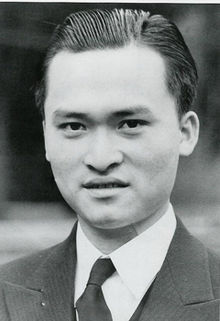
When Ho Chi Minh was fighting in Greece

Ho Chi Minh
The ambassador of Vietnam in Greece stated that this great historical personality served in the French army during the world war 1 and he was part of the French expeditionary force in Macedonia. To find some evidence about this allegation, he visited along with the mayor of a local town in Macedonia an old Greek villager(107 years old) who confirmed that Ho Chi Minh was there(area between Skydra and Edessa) during the WW1, mentioning facts that give little doubt about the clarity of this historical detail in the life of Ho Chi Minh.


soldiers of the Macedonian front during WW1 

source : protothema.gr

Background info

What were the French doing in Macedonia during the WW1? Greece was in the side of the Entente during the WW1 as did France. France and Britain sent reinforcements to prevent the Ottoman empire,Bulgaria and Austria-Hungary from dominating  the Balkan peninsula. The Austro-Hungarians had already occupied Yugoslavia and Greece remained the only Balkan bulwark of the Entente.

The French army in the Macedonian front was called Armee d'orient and was consisted of persons of different nationalities, mainly coming from the French colonies.One of the French colonies was indochina which comprised the countries of Cambodia Laos and Vietnam.Under the orders of the commander of the army were all the allied forces in Macedonia. Therefore Armee d'orient ended up to be called the whole entente army in Balkans.

Ho Chi Minh was a well travelled man. He worked in the USA as a cook and he lived in UK for some time. In France(ironically) his political ideas were shaped. These political ideas would later make him seek the Vietnamese independence from France through armed struggle.

Wednesday, May 9, 2012

9/5/1945 The Soviet victory day

The famous image with the Soviet flag on the German Reichstag.

In May the 9th 1945 in front of Georgy Zhukov the famous Soviet general of the red army, Nazi Germany surrendered with no terms. The WW2 was reaching an end marking the victory of Human over Nazism. The Soviets paid the biggest blood tax than any other country in this war in order to achieve this victory.

In a war front of 3.000 to 6.200 kilometers the Soviets fought against the mighty Axis forces for 1418 days.
During the war for every minute that was passing the Soviets were loosing an average of  9 men, for every hour 507 and for every day 1.400.To understand better the height of the numbers the other main allies USA and Britain lost from 400.000 soldiers each while the Soviets lost nearly 20 million people and 10 million were wounded or disabled.

The war cost for the Soviets was higher than both USA England and France together.This was due to the fact that the German forces unlike USA England and France(which didn't offer much resistance) achieved to penetrate much into the Soviet territories causing much damage to infrastructure. Additionally the Soviets who were engaged in a scorched earth policy they were also destroying their own infrastructure.In total 1.700 cities 70.000 villages and over than 30.000 industries were destroyed in the Soviet union during the war.

Regardless from what happened later(Cold war) and from what Stalin has commited during his reign we need to acknowledge the significant contribution of the Soviets in the war against Nazism, cause neither the Soviets nor USA and England would have been able to win this alone.


Monday, April 23, 2012

Who was Saint George

Today on April the 23rd all the christian churches honour the memory of one of the most popular saints of christendom . St. George was born and raised in the eastern part of the Roman empire during the reign of the Roman emperor Diocletian.

It was a time that christian persecutions had reached their climax as the imperial authority aknowledged only the pagan religion as the only acceptable religion in the empire. Saint George was a son to a Roman officer from Cappadokia and to a woman from Palestine.From their names(Polychronia, Gerontius) we conclude that they were both Hellenised.Besides the name that they gave to their son(Georgius) which means farmer in Greek.

Saint George served as an imperial guard of the emperor in Nikomedia.The emperor knew his father so he was glad to have his son serve him too. As we said above Diocletian was a sworn enemy of christianity and one day he issued an edict by which all the imperial guards who were christians would be executed and the rest of them would offer a sacrifice to a pagan god.

Saint George didn't hide his faith and in front of the emperor he renounced his edict and declared himself a christian. Diocletian who as we mentioned knew Saint George's father didn't want to kill one of his best soldiers and instead he attempted to convert him by trying to bribe him. However Saint George remained relentless.

As a result of all this Saint George suffered a martyric death from decapitation. His body was buried back in his hometown in Palestine.

Legend

The most famous legend of Saint George is the slaying of the dragon.According to the story the inhabitants of a city were threatened by a dragon that made its nest near the water source. So every time they had to take water they also had to sacrifice an animal or a maiden to lure the dragon out of its nest.Saint George stopped this by killing the dragon.As a sign of gratitude the whole city converted to christianity.

Saint George's veneration was widespread in the Roman and later the Byzantine East. His name and legends spread to the west with the return of the crusaders from the Holy lands. Nowadays he is patron saint of mant countries like England and Georgia but also of extinct countries like Genoa, Aragon and Catalonia.


                                                              Saint George in Western Art


                                          Saint George in Eastern art


Saint George statue in Georgia
Some eastern icons depict Saint George unmounted


Sunday, March 4, 2012

The concept of being clean in history.

peeing a pedestrian was not rare some centuries ago

Nowadays hygiene is something fundamental.Many people expect to find their cities clean and they do the most to keep themselves clean too. Being neat is a must in the western society, but was it always like this? Did we always use the same method to keep ourselves clean?


Let's go in the 16th and 17th century. At that time people believed that water could enter the body and that made it automatically unhealthy.Precisely they believed that hot water was allowing the entrance of unhealthy "air" which could damage the human organs.


Therefore with water out of the options people at this era relied on dry cleaning methods. The nobles were rubbing their face with handkerchiefs containing perfume.In the 16th century savoir vivre replaced the hygienologists. Bath continued to be an uknown word and instead the guides were giving alternative proposals like rubbing a roller with perfume on our armpit if it smelled like a goat.Hair cleaning included removal of grease with powder without using water.


About the body they were not doing anything. The whiteness of someone's clothes indicated his social status. Thus everyone was struggling to keep their clothes clean instead of their body.There were examples like the one of a French baron called Sobeur who was changing his shirt and collar every day while he was changing his underwear every four weeks. Of course the poor people couldn't even clean their clothes cause they didn't have other clothes than the ones they wore.


The immoral baths


In Byzantium the public baths were part of daily life. They were organised in guilds and offered comforts like steam bath , wine , food and resting places.In the 15th century  a private bath was part of the parties of the rich people.The dukes were combining official dinners into private baths.But as we aforementioned since the 16th century all this changed. For instance the baths of Versailles constructed by Louis XIV ended up as residence of the count of Toulouse. At this time baths were associated with immoral acts and were and example of social corruption. In England baths were were forbidden since the 15th century from a decree by Henry the 5th.


Exactly the opposite was happening in the east. The Byzantine tradition of the baths survived in the Ottoman empire with the hamams or more popularly known today as Turkish baths.Meanwhile in the west even doctors like the French royal physician De Laurence  who denounced bathing rendering water as the cause of all body malfunctions. Even  Roger Bacon was suggesting that people should wash themselves using substances  similar to the human flesh and body.All these suggestions influenced the society and nobles of the 17th century were having a bath once every five months. Bath was only allowed for medicinal occasions. The notorious Sun king Louis XIV took a bath twice after suggestions of his physicians and stated that he didn't want live that painful experience.Only in the second half of the 20th century the idea of bathing as a habbit of the rich spread. However the association of bathing with hygiene was still something unknown.


Dirty cities

There were no private toilets 300 tears ago. Thus people were doing it everywhere
Sewers in the cities were introduced in the 19th century. Before that the cities were a mess. The garbage and crap were smelling everywhere and the nobles were moving in the cities with coaches. When they had to walk they were wearing high boots in order to avoid the dirty waters.In the German city of Ulm they were even using stilts. The authorities tried to improve the situation by putting fines on those who threw their garbage on the streets but it was ineffective.It's interesting to mention that one of the first cleaning methods was to unleash pigs which would eat all the garbage.

Toilet? What's a toilet?

Workers had to collect all the crap from the streets. It was a really dirty job.
Since the ancient times there were sewers in the cities. However we know that even organised cities like Byzantine Constantinople had serious problems with crap.In the medieval era people didn't have private toilets.Thus people were polluting the streets and public toilets were a source of all diseases.People were building small rooms with holes in order to have something similar to a private toilet. Boccaccio  in The Decameron he mentions an incident where somebody fell on the wooden walls of a ready to collapse toilet and was mocked by everyone around.

Friday, January 6, 2012

100 years of history in a nice video

Firstly i wish a belated happy new year to everyone! 
I am posting a very well made video which shows the main events in world history that happened the last 100 years.By watching this you are going to make a time travel from the sinking of the Titanic to the World wars and the main events of the first decade of the new millenium. It's also a nice way to refresh your historic memory.


Friday, November 18, 2011

How the Papal Rome became the capital of Italy.


The Italian peninsula in 1861.


Since the time of the first independence movements in the 19th century, the issue of the ineligibility of the political and spiritual authority of the pope arose. Napoleon III was approving the Italian unification and the restraining of the papal territories but in the same time as a leader of a catholic state he didn't want to see a pope growing weaker and weaker.Additionally the pope was the spiritual father of Napoleon's III son who would be the future king of France.


The Italians were discontent  with the existence of the French papal guard in Rome and didn't cease to remind the issue of Rome to Napoleon III. Napoleon III was trying to find a consenting decision than would satisfy the Italians and wouldn't infuriate the catholics in his country and the catholic bishops.

Napoleon III emperor of France
Paradoxically Garibaldi's conquest of the kingdom of Naples would trigger new developments on the matter. In 1861 Garibaldi encouraged secretly by the Italian government sailed to Palermo to recruit soldiers in order to march towards Rome and occupy it. However Napoleon III was so enraged that the Italians themselves attempted to stop Garibaldi . In 1862 in the battle of Aspromonte Garibaldi was captured and his army was scattered.The next days negotiations between Italy and France began and eventually ended in 1864 with the agreement of September. According to the agreement Napoleon III had to withdraw the french guards from Rome and the Italian king had to respect the papal authority. Victor Emmanuel the Italian king moved his capital to Florence phenomenically quitting from claiming Rome.


Napoleon III  worried about the reaction of the Italian minorities in France was tried to find a way to pay a compensation to Italy. He found a perfect pretext for this in the eve of the war between the Austrians and the Prussians.  Before engaging into war with Vienna, Bismark enquired Napoleon III about his neutrality in this war. Napoleon III told him that he would keep his neutrality and in exchange he wanted Bismark to cede Venice to Italy in case of a Prussian victory.


The Austrians also worried by the prospect of an alliance of the French with the Prussians negotiated to cede Venice to Italy and in exchange if they were victorious they would annex Silesia. Therefore a new situation was created by which Italy would be favoured one way or another.

Giuseppe Garibaldi
Although everything was favourable for Italy in the battlefield the Italian army and navy proved to be much weaker than the circumastances demanded.  Fortunately for the Italians the Prussians were victorious against Austria and set out peace negotiations as winners. Although Bismark didn't negotiate in favour of the Italians, Napoleon's III intervention achieved the annexation of Venice to Italy. This unexpected annexation made the Italians turn their eyes once again to Rome. However the French emperor who was the one who encouraged and supported the Italian unification was the main obstacle in the Italian claims about the political authority of the Pope over Rome.


Once again Garibaldi led a new expedition in 1867 against Rome but Napoleon III under pressure of the French catholics sent a French regiment to Italy in order to stop Garibaldi. The French were successful at stopping Garibaldi and this triggered a series of tensions between the two nations. The French prime minister's speech in the parliament made the situation even worse. He said : Italy will never conquer Rome.France will never tolerate such a violence against its honor and catholicism. The day that Italy will attempt to take Rome France will stand and defend it. 


However these words didn't seem to have much of  importance as three years later when France was in the verge of war with Prussia and negotiated with Italy about a potential alliance. Although the French were not negotiating the Rome issue, after the French defeat in the battle of Sedan and the capture of Napoleon III by Prussian forces the French guard of Rome withdrew and after a parody battle the Italians captured Rome and Victor Emmanuel moved his capital there. Later via a referendum the Italian king ratified the annexation of Rome to Italy.


Napoleon discusses with Otto von Bismark after being captured in the battle of Sedan
source: based on History of Europe by Serge Berstein, Pierre Milza

Thursday, November 3, 2011

Can continuous loaning reduce or increase the public debt of a country? Let's go back in history and see.


Between 1822 and 1826  Great Britain which was at the time  a world power as an intention of goodwill(?) offered loans to the countries of Latin America which were under Spanish and Portuguese colonial occupation.The loans were worth of 23 million golden sterlings. We can compare this aid like the Marshall plan undertaken by U.S.A for helping the severely damaged from the WW2 European countries.


These loans were about to be used by the countries to develop an infrastructure, create new working positions for the impoverished population, and develop and prospering economy.Once the loan was approved immediately its amount was reduced by taxation,interest and various expenses.Latin America received the remaining money which which were...7 million sterlings. However those who received the loan should repay the whole amount of the loan and not the amount that eventually ended up in their countries.


One of those loans was given to Argentina in 1824  by the British bank Baring brothers with a guarantee from the British bureaucracy. From the one million sterlings again because of some economic factors only 575.000 were given to Argentina in banknotes instead of pure gold as it was agreed.The governments of these countries were consisted of corrupted aristocrats who were in the sphere of influence of various European countries As a result not even a sterling was used for the development of their countries. There was no infrastructure created no industrial developement and generally there were no positive conditions for these countries to cut the colonial economic bonds with the Europeans.On the contrary the money was spent for personal reasons of the members of the governments and inevitably some years later Argentina was not able to pay the instalments of a loan that technically never received.


The British were not upset for the inability of Argentina to repay the loan.By showing generosity(?) they approved new loans for Argentina so that it could be able to pay the instalments of the old loans.This procedure became permanent . Argentina was receiving new loans in banknotes from which as usual the 50% of money remained in Britain for taxation and etc. Argentina was  paying with that money the instalments of previous loans in the price they were approved and not in the price of money which eventually were received by Argentina.


The first loan which ended up in the pockets of aristocrats was fully repaid in the end of 19th century. With the interest rate Argentina repaid a loan of 500.000 sterlings giving back 4 million sterlings.When Argentina repaid its first loan the whole amount that it owed to Britain for the subsequent loans was 130 million sterlings. This was nearly 260 times higher than the initial amount of money loaned by Britain to Argentina.


This was just a prologue of what was coming 100 years later in 2001.

Wherever you see Argentina replace the name with Greece. And wherever you see Britain replace it with banks. There you go, now we now that history is recursive.

Tuesday, June 21, 2011

Greek inscription of a Roman gladiator's tombstone decoded after 1800 years


An enigmatic message(written in Greek) on a Roman gladiator's 1,800-year-old tombstone has finally been decoded, telling a treacherous tale.


Tombstones talk
The epitaph and art on the tombstone suggest the gladiator, named Diodorus, lost the battle (and his life) due to a referee's error, according to Michael Carter, a professor at Brock University in St. Catharines, Canada. Carter studies gladiator contests and other spectacles in the eastern part of the Roman empire.

He examined the stone, which was discovered a century ago in Turkey, trying to determine what the drawing and inscription meant. 

His results will be published in the most recently released issue of the Zeitschrift für Papyrologie und Epigraphik(Journal for Papyrology and Ancient Epigraphics).
The tombstone was donated to the Musee du Cinquanternaire in Brussels, Belgium, shortly before World War I. It shows an image of a gladiator holding what appear to be two swords, standing above his opponent who is signalling his surrender. The inscription says that the stone marks the spot where a man named Diodorus is buried.
"After breaking my opponent Demetrius I did not kill him immediately," reads the epitaph. "Fate and the cunning treachery of the summa rudis killed me."
The summa rudis is a referee, who may have had past experience as a gladiator.
The inscription also indicates Diodorus was born in and fought in Amisus, on the south coast of the Black Sea in Turkey.
Though Carter has examined hundreds of gladiator tombstones, this "epitaph is completely different from anything else; it's telling a story," he told LiveScience.

The final fight
The story the tombstone tells took place about 1,800 years ago when the empire was at its height, its borders stretching from Hadrian's Wall in England to the Euphrates River in Syria.
Gladiator games were popular spectacles, many of them pitting two men against each other. Although deaths from wounds were common, the battles were not the no-holds-barred fights to the death depicted by Hollywood, said Carter.
"I believe that there are a number of very detailed rules involved in regulating gladiatorial combat," Carter said.
Though the exact rules are not well understood, some information can be gleaned from references in surviving texts and art. 
For starters, most, if not all, of the fights were overseen by the summa rudis.
Among the rules he enforced was one in which a defeated gladiator could request submission, and if submission was approved by the munerarius (the wealthy individual paying for the show), the contestant could leave the arena without further harm.
Another rule that appears to have been in place was that a gladiator who fell by accident (without the help of his opponent) would be allowed to get back up, pick up his equipment and resume combat.

Death of Diodorus
It's this last rule that appears to have done in Diodorus. Carter interprets the picture of the gladiator holding two swords to be a moment in his final fight, when Demetrius had been knocked down and Diodorus had grabbed a hold of his sword.
"Demetrius signals surrender, Diodorus doesn't kill him; he backs off expecting that he's going to win the fight," Carter said.
The battle appears to be over. However the summa rudis — perhaps interpreting Demetrius' fall as accidental, or perhaps with some ulterior motive — thought otherwise, Carter said.
"What the summa rudis has obviously done is stepped in, stopped the fight, allowed Demetrius to get back up again, take back his shield, take back his sword, and then resume the fight."
This time Diodorus was in trouble, and either he died in the arena or Demetrius inflicted a wound that led to his death shortly thereafter.
This event would have happened before a crowd of hundreds, if not thousands, of people in a theater or in part of an athletic stadium converted into a sort of mini- Colosseum.
After Diodorus was dead, the people who created his tombstone (probably family or friends) were so upset, Carter suggests, that they decided to include some final words on the  epitaph:   
"Fate and the cunning treachery of the summa rudis killed me."

source : livescience.com

put your country on top

free counters