Showing posts with label Greek revolution. Show all posts

Monday, March 25, 2013

The tragic end of the heroes of the war for the Greek independence.


Boubouli_Anntroutsos(an article from Greekreporter.com)
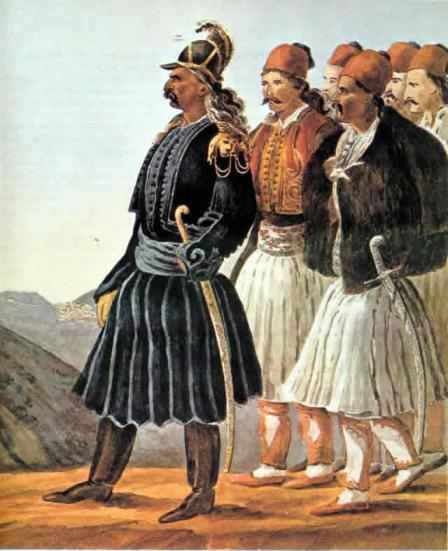
The Greek War of Independence commenced in 1821 and waged until 1832 when the Greek free state was finally established under the blessings and the needs of the then powerful allies of the Greek revolutionaries, the British, the French and the Russian. The national day celebrated on March 25th pays tribute to all men, women and children who lost their lives for the dream of a sovereign free country, and especially to the heroes of the Greek Revolution that risked their lives for freedom from the Ottoman Empire. But as always, there are black pages in every history book of the world, and Greece’s were not an exception. Although it goes mostly unnoticed, the fact is that many Greek captains of the Revolution were sent to jail during and after the war against the Ottomans. Others were pushed aside by the newly formed state as too dangerous for the common good or too unpredictable for the reigning forces.
Here follow some of the most exemplary and tragic stories of the Greek captains of 1821, who ended up underprivileged, captured, begging on the streets and even dead.
Nikitaras
Nikitaras
Nikitas Stamatelopoulos or Nikitaras or the Turk-eater died in September 25, 1849, totally forgotten and poor.The brave and honorable man who stood out in the battle of Dervenakia and was told to have broken three swords with his fury in the battlefield, was groundlessly accused of conspiracy against King Otto and was sent to prison first in Palamidi (along with his uncle and Revolution captain Theodoros Kolokotronis) and then on the island of Aegina.
When the then Greek Prime Minister Ioannis Kolettis asked him to kill a rival and former captain of the Greek Independence war, Odysseas Androutsos, in exchange for a government position, Nikitaras refused the offer and became angry with Kolettis. He also refused to take booty after the victorious battle of Tripolis, a normal practice of Balkan irregulars at the time.
 4.1.2
Odysseas Androutsos
Nikitaras was released from prison in 1841, but the period in jail broke his health and he was almost blind due to diabetes problems. The Greek state refused to grant him and his family any descent pension to make a living, but instead allowed him to beg before a Virgin Mary church every Friday. In 1843, when King Otto was forced to sign the Constitution, Nikitaras was given the title of major general and an insignificant pension. He died in 1849 in Piraeus.
A major hero of the Greek War of Independence, Odysseas Androutsos earned the title of Commander in Chief of the Greek forces in Roumeli, but his glory did not last long. His intense personality and constant conflicts with the “kalamarades” as he called the politicians and the clergy resulted in making him suspicious of the politics followed at the time. In spring 1822 Ioannis Kolettis accused him of betrayal and cooperation with the Ottomans, so that Androutsos gave up his title as Commander in Chief but never gave up his fighting against them. Seieng through the scheming of politics, Androutsos retired in a cave, the Black Hole, totally disappointed with the newly emerged state of the Greeks after the independence war.
There, in his cave north of Parnassus Mountain, Androutsos’ isolation made Kolettis and his enemies even more suspicious of his intentions and soon he was accused of making agreements with the enemy against the interests of the Greeks. Androutsos, however, is said to have called for the cooperation of the Ottomans in order to take them by surprise and fight them from the inside. The arrest of Kolokotronis made Andoutsos even more hostile towards politicians. Then the government in 1825 assigned to Yiannis Gouras, a close lieutenant of Androutsos, with the mission to take care of Androutsos. Androutsos finally surrendered to the government forces and was led to an Athens prison. Karaiskakis, another major figure of the Greek Independence war, was outraged by his imprisonment and even attempted to rescue his fellow fighter. The attempt failed and to cool things down Gouras asked for the government’s help.
The trial date for Androutsos was pending now, but on June 5 at midnight Gouras gave the order and five men including an unknown priest entered Androutsos’ cage and killed him after hours of torture. The lifeless body of Androutsos was then pushed off the prison tower of Goula down to the Temple of Athena Nike of the Acropolis. Androutsos’ death was declared as a failed escape attempt.
Bouboulina_Friedel_engraving_1827
Lascarina Bouboulina
Laskarina Bouboulina was a Greek naval commander and heroine of the Greek Revolution. Being married twice to prosperous husbands, Bouboulina bought arms and ammunition at her own expense and brought them secretly to the island of Spetses on her ships, to fight for the sake of her nation. Construction of her ship Agamemnon was finished in 1820. She bribed Turkish officials to ignore the ship’s size and it was later one of the largest warships in the hands of Greek rebels. She also organized her own armed troops, composed of men from Spetses. She used most of her fortune to provide food and ammunition for the sailors and soldiers under her command.
The people of Spetses revolted on 3 April, and later joined forces with ships from other Greek islands. Bouboulina sailed with eight ships to Nafplion and began a naval blockade. Later she took part in the naval blockade and capture of Monemvasia and Pylos.
When the opposing factions erupted into the second civil war in 1824, the Greek government arrested Bouboulina for her family connection with now-imprisoned Kolokotronis; the government also killed her son-in-law Panos Kolokotronis. With the order to be arrested, she was exiled back to Spetses poor and disappointed by the new Greek reality. In 1825, while Ibrahim Pasha of Egypt disembarked in Pylos in a final attempt to smother the revolution, Bouboulina began preparing for new battles despite her animosity towards the politicians. However, on May 22 of the same year, Bouboulina would die a tragic death. Her younger son from her first marriage fell in love with the daughter of the powerful Koutsaios family of Spetses and the couple fled to the house of Bouboulina’s first husband. Bouboulina and the Koutsaios soon arrives at the house and after a long and furious dispute, Ioannis Koutsis shot her in the head fatally. The case was closed and no-one ever put the perpetratorson on trial.
Friedel_-_Manto_Mavrogenous
Manto Mavrogenous
Manto Mavrogenous was a Greek heroine of the Greek War of Independence. A rich woman,who spent all her fortune on the Hellenic cause. Under her encouragement, her European friends contributed money and guns to the revolution. When the struggle began, she went to Mykonos, the island of her origin, and invited the leaders there to join the revolution.
She equipped, manned and “privatized” at her own expense, two ships with which she pursued the pirates who attacked Mykonos and other islands of the Cyclades. She also equipped 150 men to campaign in the Peloponnese and sent forces and financial support to Samos, when the island was threatened by the Turks. Later, Mavrogenous sent another corps of fifty men to Peloponnese, who took part in the Siege of Tripolitsa and the fall of the town to the Greek rebels. She spent money on the relief of the soldiers and their families, the preparation of a campaign to Northern Greece and the support of several philhellenes. She also sent a group of fifty men to reinforce Nikitaras in the Battle of Dervenakia.
She moved to Nafplio in 1823, in order to be in the core of the struggle, leaving her family as she was despised even by her mother because of her choices. After her unfortunate love story with Dimitrios Ypsilantis, Mavrogenous lived depressed for a while in Nafplion. After Ypsilanti’s death and her political conflicts with Ioannis Kolettis, she was exiled from Nafplio and returned to Mykonos to live in extreme poverty. When the war ended, Greek Prime Minister Ioannis Kapodistrias awarded her the rank of the Lieutenant General and granted her a dwelling in Nafplio, where she moved. She left for the island of Paros in 1840, where she died in July 1848, in oblivion and poverty.


Friday, March 25, 2011

Official proclamation by Barack Obama for the Greek independence day


 The White House

Office of the Press Secretary

Presidential Proclamation--Greek Independence Day: A National Day of Celebration of Greek and American Democracy

A PROCLAMATION
One hundred ninety years ago, Greece regained its independence and became a symbol of democracy for the world for the second time in history. As America recognizes this milestone in the birthplace of democracy, we also celebrate our warm friendship with Greece and the lasting legacy of Hellenic culture in our own country.
America's Founders drew upon the core democratic principles developed in ancient Greece as they imagined a new government. Since that time, our Union has strived to uphold the belief that each person has a fundamental right to liberty and participation in the democratic process, and Greece has continued to promote those very principles. Over the centuries these cherished ideals -- democracy, equality, and freedom -- have inspired our citizens and the world.
The relationship between the United States and Greece extends beyond our common values and is strengthened by the profound influence of Greek culture on our national life. From the architecture of our historic buildings to the lessons in philosophy and literature passed on in our classrooms, America has drawn on the deep intellectual traditions of the Greeks in our own establishment and growth as a nation. Reinforcing the steadfast bonds between our two countries, Americans of Greek descent have maintained the best of their heritage and immeasurably enriched our national character.
The American people stand with Greece to honor the legacy of democracy wrought over 2,000 years ago and its restoration to the Hellenic Republic nearly 200 years ago. As we celebrate the history and values of Greece and the United States, we also look forward to our shared future and recommit to continuing our work as friends and allies.
NOW, THEREFORE, I, BARACK OBAMA, President of the United States of America, by virtue of the authority vested in me by the Constitution and the laws of the United States, do hereby proclaim March 25, 2011, as "Greek Independence Day: A National Day of Celebration of Greek and American Democracy." I call upon all the people of the United States to observe this day with appropriate ceremonies and activities.
IN WITNESS WHEREOF, I have hereunto set my hand this twenty-fourth day of March, in the year of our Lord two thousand eleven, and of the Independence of the United States of America the two hundred and thirty-fifth.
      BARACK OBAMA

The president of USA  Barack Obama

Thursday, March 24, 2011

Greek Revolution part 4: The battle of Dervenakia

The battle of Dervenakia is perhaps the most crucial battle of the Greek revolution. It took place in 1822 just one year after the revolution broke out and its success allowed the Greeks to continue their struggle for independence.


The Greeks ambush the main body of the Ottoman army.

It was July of 1822 and the Sultan upset of the revolution's success decided to send a regular army to quell any ressistance once and for all.After he defeated the rebel Ali pasha he had available forces to send to Peloponnese

He chose as a commander the talented Mahmut Pasha or Dramalis.
Dramalis proceeded with an army of 25.000 soldiers facing no ressistance until he reached the Isthmus of Corinth. Sources mentioned that the Greeks were fleeing in the sight of such a large army and the high morale of the initial stages of the war had been lost as many considered that there was no force in Greece that could beat this army.


Dramalis' aim was to reclaim Tripolitsa the capital of Peloponnese or Morea as it was called in this time. The landscape of Peloponnese is mountainous and moving a large force was slow through narrow roads.Therefore even though the geographical proximity was small it was dangerous to make a direct attack.The advisors of Dramalis old him to use Corinth as a base of operations but he mistakenly did the opposite. Likely because of arrogance he decided to recalim the forts of Morea one by one before entering Tripolitsa.

Theodoros Kolokotronis in black
Mahmut Pasha "Dramalis"
       As it is aforementioned the Greeks were demoralized and were fleeing from the areas the Ottoman army was approaching. So it was done when Dramalis decided to move towards the plains of Argos to take Nauplion an important port. Noone stood against him while he was passing with his army from mountainous regions which were fit for guerilla war and ambushes.


Dramalis took Nauplion and the greek government that was stationed near it fled panicked towards the ships .
In these dire moments a great leader arose Theodoros Kolokotronis .While anarchy and despair prevailed among the the Greeks he was the one who organised a ressistance to slow down Dramalis' advance.


    He succeeded to keep Dramalis' army in the Nauplion region by putting defences in strategic spots that were leading to Tripolitsa, by reinforcing the defences of local forts, and by using a scorched earth policy to cause starvation in Dramalis' large army.He also mobilised the demoralized Greeks through his majestic appearance(he wore a western military outfit) his reputation(he was already a succesful and experienced officer) and his fiery speeches.

Kolokotronis rallies the troops
Dramalis was not able to secure all the forts in Nauplion region and therefore he couldn't march for Tripolitsa without securing his rear. The crucial point for the turning of the events was Dramalis' decision to return back to Corinth and expect reinforcements and to take supplies for his starving soldiers.It's worth to mention the efforts of the Greek navy which effectively blockaded the region from ships that could bring supplies thus forcing Dramalis to return back to Corinth


Dramali chose to return through the narrow passes being unaware of the surprise awaiting him. This decision was taken  due to the calm passage of his forces when he was marching towards Nauplion. Kolokotronis' foresaw the return of  Dramalis through the narrow pass and orchestrated a series of guerilla attacks to slow down Dramalis' army at the Dervenakia narrow pass. The casualties of Dramalis' army by these series of attacks were heavy but in Dervenakia his army was almost annihilated and Dramalis himself barely escaped towards Corinth. In the Dervenakia battle it is estimated that 3.000 Ottoman soldiers were slain while it is not sure how many were killed from the other attacks.

The Greek force was estimated at 2.500 soldiers which was a 1:10 ratio comparing to Dramalis' army. It was sure that an open battle was a suicide for the Greeks and Kolokotronis knew that .He wasn't characterized unfairly as a strategic genius because to defeat a 10 times larger force with an irregular force was a great achievement.But even greater was his tactics to trap and defeat his enemy not by using full force but by causing attrition through shoot and go tactics.

Tuesday, March 22, 2011

Greek Revolution part 3:Giorgakis Olympios


Olympios was born in 1772 in the village of Livadi near Larissa and the mountain Olympus.His father was a prominent person in the society as he was a Prouchontas(Greek tax collector). He lost his mother ony a few years after he was born. that's why everyone was treating him like their child and even when he grew up he was still called Giorgakis(nickname of the the name George). He was educated at the school of Livadi but from a young age he joined the armatoloi of his area and  protected effectively the surrounding Greek villages from raids by the rebel governor of Epirus Ali pasha. His family had already produced some renown armatoloi who were literally controlling the area of the mountain Olympus. Because of this heritage Olympios received the best training and soon he become one of the best armatoloi of Olympus.


Olympios' statue in Katerini, Greece
In 1804 the Serbians had revolted against Turkish authority and one the Serbian armatoloi Velko Petrovic asked  for Olympios' and other Greek armatoloi assistance. Olympios just like Rigas Pheraios believed that independence for the Balkan nations could only be done if they fought united against the Ottomans.In Serbia he fought along with 550 Greeks bravely for the Serbian cause. From Serbia he started corresponding with Constantine_Ypsilantis prince of Moldavia and Wallachia for the possibility of the creation of an army of Greeks and Romanians to fight the Ottomans.  Olympios participated in the creation of this army and fought along with 1500 greeks in the war of Russia with the Ottomans. His fame and reputation reaches soon the ears of the czar of Saint Petersburg.Olympios met with the minister of foreign affairs of Russia Ioannis Kapodistrias and via this acquintance he got initiated into the Filiki Etaireia and he was appointed general of the greek forces in Moldowallachia.


Even though he was a warrior his eloquence and rhetoric made him also an apostle of the filiki etaireia.He went from village to village to persuade the Greeks join the preparation of the revolution. In 1821 the revolution began not in Greece but in Moldowallachia cause Ypsilantis thought that by this way he could make the Russians intervene on behalf of the Greeks.However Russia condemned this revolution and gave permission the Ottoman empire to invade Wallachia. Ypsilantis' force was consisted mainly of Greek students who had no experience and consequently their army was anihilated in the battle of Dragatsani. Only a few survived, among them Olympios who saved Ypsilantis from dying in battle and escorted him at the Austrian borders.


Olympios is setting the gunpowder on fire.
Ypsilantis told Olympios to leave and go back to Greece but Olympios told him: Now that we have taken arms shall we leave them behind?Olympios continued his desperate fight in Wallachia with only 350 soldiers but the Turkish authorities were determined to kill every single Greek who took arms against them. Olympios finally was trapped by  10.000 turkish soldiers in a monastery . The Turkish pasha sent him letter for his surrendering but he proudly rejected any negotiation.Then a siege of the monastery began and  when the Ottomans broke in there were only Olympios and 11 loyal soldiers around him in the bell tower of the monastery.
He had concentrated there large amounts of gunpowder. While the Ottomans were getting into the monastery he opened the door of the bell tower and said to his soldiers: "Go away cause i am gonna burn now" .However noone left and Olympios set the gunpowder on fire and the whole monastery exploded.

Monday, March 21, 2011

Greek Revolution part 2- Vassos Mavrovouniotis Vaso Brajović


Early life
 Vaso Brajovic or later Vasos Mavrovouniotis was an important figure of the Greek revolution. Historians do not question his Philellenism while others believe that he was alledgedly  an adventurer who seeked to make money.
He was born towards the end of the 18th century in Bjelopavlici a village located in what is today  Montenegro or  Crna Gora (Црна Гора).  It's worth to mention that Montenegro was never occupied by the Ottomans as a whole. Even when the Ottoman empire reached its peak by even besieging Vienna itself the Montenegrims had some sort of autonomy.This makes obvious that the region along with its geographical advantages produced some very brave men.One of them was also Vasos Mavrovouniotis.

 When he became 20 years old for uknown reasons he left his home and went to Asia minor(present day Turkey). There he met his later best friend and spiritual brother Kriezotis who was an Arvanite of Greek conciousness.There are no sources about their activities in Minor Asia. Likely they either became mercenaries or bandits.

In 1820 Mavrovouniotis goes to Athens. There he is appointed as a flag carrier for the Ottoman force that was going to crush the rebellion of Ali Pasha in Epirus. He was deeply  insulted by this appointment because he thought he was better than just a flag carrier and he deserted.

Greek revolution
 In 1821 when the revolution started he was in Carystus in the island of Euvoia.He soon became the leader of the revolution in the region. In his first three battles in Euvoia he was not very succesful. We can say that the situation remained stalemate.This is because the Turks of the island were surprisingly fighting as bravely as the revolutionaries.In his fourth battle against the Ottoman forces of the island the co-captain of the revolution  in the island Ilias Mavromichalis died. Thus leaving only Mavrovouniotis as leader of the greek rebels in the island. It was a battle were the two leaders combined their forces to liberate an important town but their plans didn't go as they expected and they suffered a dissastrous defeat.

Mavrovouniotis monument in Podgorica
After this dissaster Mavrovouniotis withdrew to the mountains and fought a guerilla war.In 1822 he gave some undecisive battles having many casualties because of his choice to fight in plains. He left for Athens after a letter sent by the Athenean jury of Areios Pagos. He was invited to earn a a sum of money as a reward for his loyalty to the the revolution and his contribution(it's worth noted that, when the revolution started and he took arms he was never promised money or a reward).

Now acting under the orders of the headquarters of the revolution  Mavrovouniotis was sent  to the island of Thassos  where along with 300 soldiers he fought many victorious battles and essentially liberated the island.
However there are also atrocities reported by his army. Historians say that he left no muslim alive in the island either soldier or civilian.

After his success in Thassos with high morale he returned to Euvoia to face once again the local ottoman governor he wasn't able to beat. This time he won the battle against his enemy. However things were not going well on other fronts of the revolution thus in 1823 he had to withdraw from the island and go back to Athens were he was appointed general of the armies of Attica (Athens).

The next year a civil war broke out between the military leaders of the revolution and the political leaders.
Mavrovouniotis chose the side of the Politicians. He fought many victorious battles in Peloponnesos against his opponents. Later he fought bravely against the invasion force of the professional armies of Egypt lead by Imbrahim Pasha.In one of  his battles against the Egyptian force he lost his brother Spiros Mavrovouniotis.

He was recalled from Peloponnese back to Athens . In the same time his another brother Rantos Mavrovouniotis died heroically in the island of Psara(http://en.wikipedia.org/wiki/Destruction_of_Psara
Rantos was equally brave with Vasos and when the whole island had fallen to the ottomans he died along with 800 Greeks and 3000 Turks after a huge explosion.Despite the fact he was a non greek , he fought for the Greek cause without ever asking for a reward.

Vasos continued fighting this time in continental Greece and near Amfissa he utterly destroyed an enemy force which consisted mainly of muslim Albanians hired by the Ottomans.As Kriezotis with some exaggeration describes in his memorium  Mavrovouniotis  was not killing he was plowing his enemies.This was the most famous battle of Mavrovouniotis.

However because of the pressure in both fronts by Egyptians(http://en.wikipedia.org/wiki/Ottoman%E2%80%93Egyptian_Invasion_of_Mani)
and Ottomans his victories brought no substantial gain and he returned back to Athens. At this time something happened that not many historians mention. A greek priest came from Lebanon and with tears in his eyes asked for help form Kolletis who was serving as leader of Greece to send an army to help the Greeks in Lebanon revolt. Kolletis thought this was an excellent idea cause he was going to cause a diversion on Ottoman forces by striking at a place of the Ottoman empire than noone could imagine that Greeks could revolt.However Kolletis had no money to pay even for the currents army and he told the priest to find Mavrovouniotis and persuade him.

Mavrovouniotis and Kriezotis were persuaded to do this after the dismantling of their forces by the greek government.(It was the time that experienced military leaders like the French Favier along with 2000 French regulars had come to join the Greeks.) 

With 2500 soldiers they went to Cyprus were they pillaged the island after some victorious battles against the turkish authority.Thus he was able to pay his soldiers and get supplies for their final destination which was Lebanon. In Lebanon the main target of Mavrovouniotis was Beirut.
His battles were stalemate and the army was running out of supplies. However Mavrovouniotis ordered the soldiers not to pillage the properties of the people who were mainly christian at the time. Later reinfrcements arrived from the Greek island of Kos but an army of 25.000  cavalry arrived in Beirut and their leader Emir Beazir of Lebanon sent a letter to Mavrovouniotis asking him who they are and what they want? Mavrovouniotis answered :"We are Greeks and we came to storm this fort". The emir then asked them to leave or else he would attack them. The Greeks found it impossible to fight such an army and after an extesive pillaging  they left Lebanon.
It is still debatable by historians whether it was the revolutionary intention of Mavrovouniotis that lead him to go to Lebanon or the pillaging tactics.While the Greek revolution was failing he found himself trying to liberate once again the island where he started the revolution along with his friend Kriezotis  with collaboration of the English admiral Hamilton.
 The Egyptian forces had supressed the revolution and reconquered almost all of Peloponnese. Mavrovouniotis was fighting in 1826 against a second invading army of the Ottomans lead by Kyutachi near the last remaining fort of continental Greece, Athens. Along with one of the great leaders of the revolution general Karaiskaskis and the insight of a Hamilton who ordered the creation of a defence in Elefsina the ottoman army was stopped in Athens relieving the Peloponnese based Greek government.

The places where Mavrovouniotis fought.

 After the intervention by the European powers and  the creation of a Greek state Mavrovouniotis remained in Greece and Athens in the service of the King Otto.He married a greek woman  of wealthy family and he died in 1847.

Source:"Χρυσολόγης Αθανάσιος" Ο Ελληνικός Αγών : Βάσσος Μαυροβουνιώτης : Διατριβή αναγνωσθείσα εν τω Φιλολογικώ Συλλόγω "Βύρωνι" την 8ην Ιανουαρίου 1876 / υπό Αθ. Ν. Χρυσολόγη, 1876 Athens. 
Traslation is made by me.

Sunday, March 20, 2011

Greek revolution 1rst part- Patriarch Gregorios


In five days we have the 190th anniversary of the Declaration of the Greek revolution. Thus these days i will post a series of relative posts concerning some secondary figures of the revolution that are not so famous as others.


Patriarch Gregorius V
Patriarch Gregorios
Under the name Georgios Aggelopoulos, he was born in Dimitsana by poor parents. He received Greek education in the city which at the time was a center of learning. Georgios was attracted to monastic life and the teachings of the church. He became a monk and he took the name Gregorios.


His will for learning made him leave Dimitsana for a bigger city. He went to Smyrna where he got acquainted with the metropolitan of Smyrna and later he was appointed as his archdeacon. Gregorios' piety and  virtues helped him to promote quickly in the ecclesiastical hierarchy and at a young age(39 y.o) he succeeded to become the metropolitan of Smyrna.


The arrest of the patriarch
Soon he became renowned throughout the christian population of the Ottoman empire and everyone rejoiced when he was elected ecumenical patriarch of  Constantinople in 1797.
This period was  full of difficulties for the patriarch. The Ottoman intolerance was increasing at the time because of the economical and political deckline of the empire and because of the revolutionary tendencies of the christian populations of the empire that were triggered by the nationalisms which were inspired by the French revolution of 1789.


His contribution as a patriarch was great. He founded new schools a printing press and his main aim was to protect his christian subjects. Because of his pro-Greek activity he raised suspicions at the Ottoman court. He was twice exiled in Aghio oros(Holy mountain)  and returned back to his duties as a patriarch.


At the eve of the Greek revolution many worrying messages were coming to the Sultan from allover Greece.As a result of the outbreak of the revolution the Sultan ordered an unprecedented slaughter of Greeks as a revenge. The patriarch for typical reasons denounced the revolution but the Sultan was sure he had some contribution  in this.


Gregorios' corpse is thrown at the sea. 
In 18th April 1821 one month after the outbreak of the revolution right after he finished the Sunday mass for Easter he was dethroned and arrested. He was hunged in front of the main gate of the Patriarchate.For three days his corpse was hunging there as an example. Then he was delivered to some people who dragged him throughout the city and then they threw him at the sea of Bosporus. Fortunately a Greek merchant ship passing by found the corpse and brought it to Odessa which at the time hosted a prosperous greek community.
In Odessa he was buried by the Russian state with the honours of a patriarch. In 1871 the Greek state asked for his relic to be returned to Athens. In Athens he was buried at the metropolitan church and was declared an ethnomartyr and a saint.


Source :Biographies of the heros of the Greek Revolution (Ήρωες της Ελληνικής επαναστάσεως) by Alexandros Philadelpheus .publication: 1900 
 Translation is made by me.

put your country on top

free counters